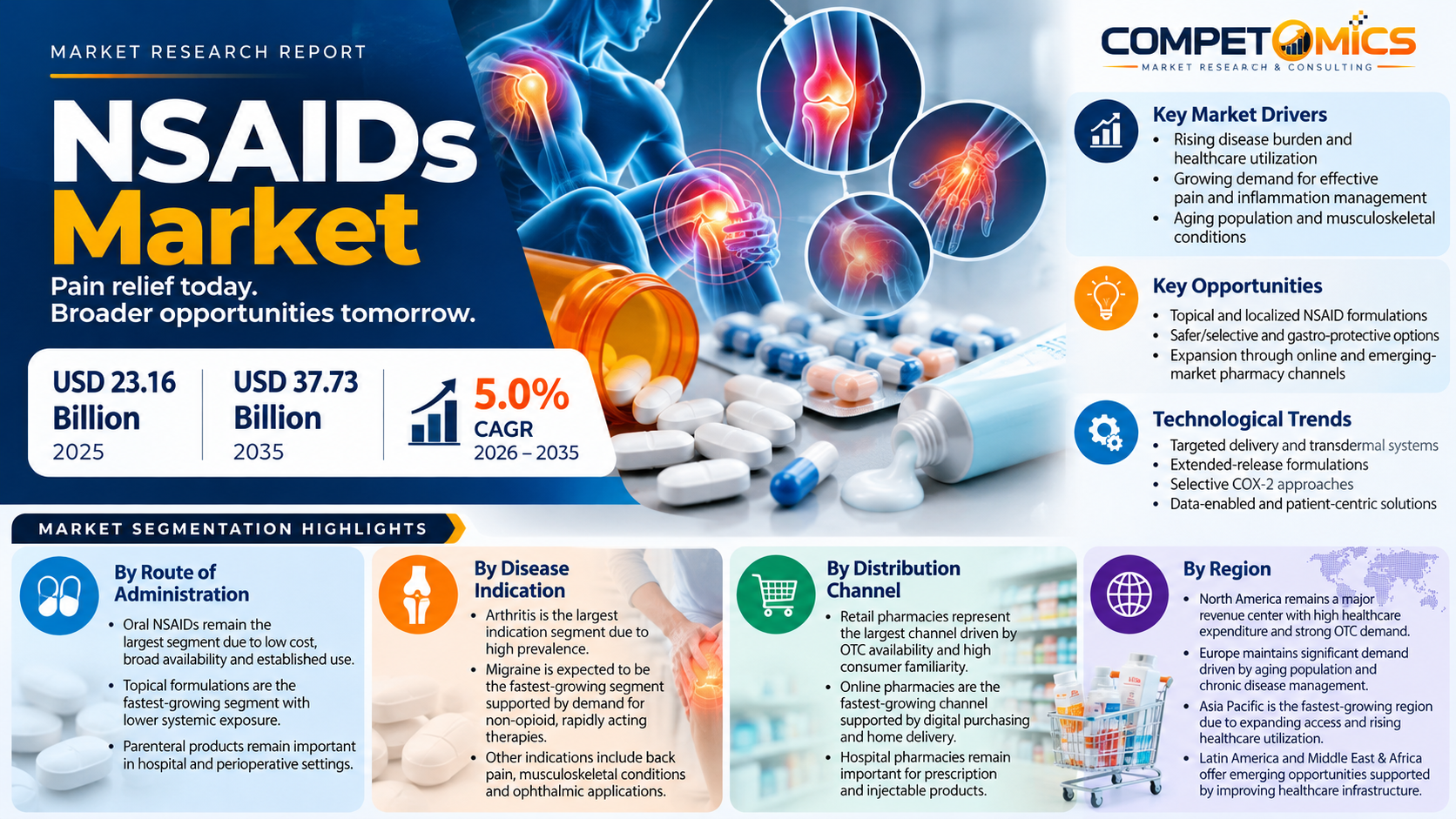
NSAIDs Market was valued at USD 23.16 billion in 2025 and is projected to reach USD 37.73 billion by 2035, expanding at a CAGR of 5.0% during 2026–2035.
NSAIDs Market was valued at USD 23.16 billion in 2025 and is projected to reach USD 37.73 billion by 2035, expanding at a CAGR of 5.0% during 2026–2035. Market expansion is supported by structural demand, technology adoption, increasing healthcare utilization and the need for more convenient, effective or connected solutions. Key opportunities include topical and localized nsaid formulations, safer/selective and gastro-protective formulations, and expansion through online and emerging-market pharmacy channels.
Parameter
NSAIDs Market
Market Size, 2025
USD 23.16 Billion
Market Size, 2035
USD 37.73 Billion
CAGR, 2026–2035
5.0%
Key Opportunities
Topical formulations, safer drug delivery, online pharmacies
Demand expansion: underlying disease burden, treatment needs and healthcare utilization continue to enlarge the addressable population.
•
Technology transition: Targeted delivery, topical/transdermal formulations, extended-release dosage forms and selective COX-2 approaches is shifting competition from basic products toward integrated, data-enabled and patient-centric solutions.
•
Access and affordability: reimbursement, pricing, distribution reach and total cost of ownership increasingly determine adoption outside premium markets.
•
Home and decentralized care: movement of routine management from hospitals to homes and outpatient settings is creating demand for easier self-use and remote support.
•
Data and interoperability: connectivity with smartphones, cloud platforms and clinical systems is becoming a commercial differentiator.
•
Regulatory and evidence requirements: manufacturers increasingly need to demonstrate safety, usability, clinical value and cybersecurity alongside technical performance.
By Route of Administration
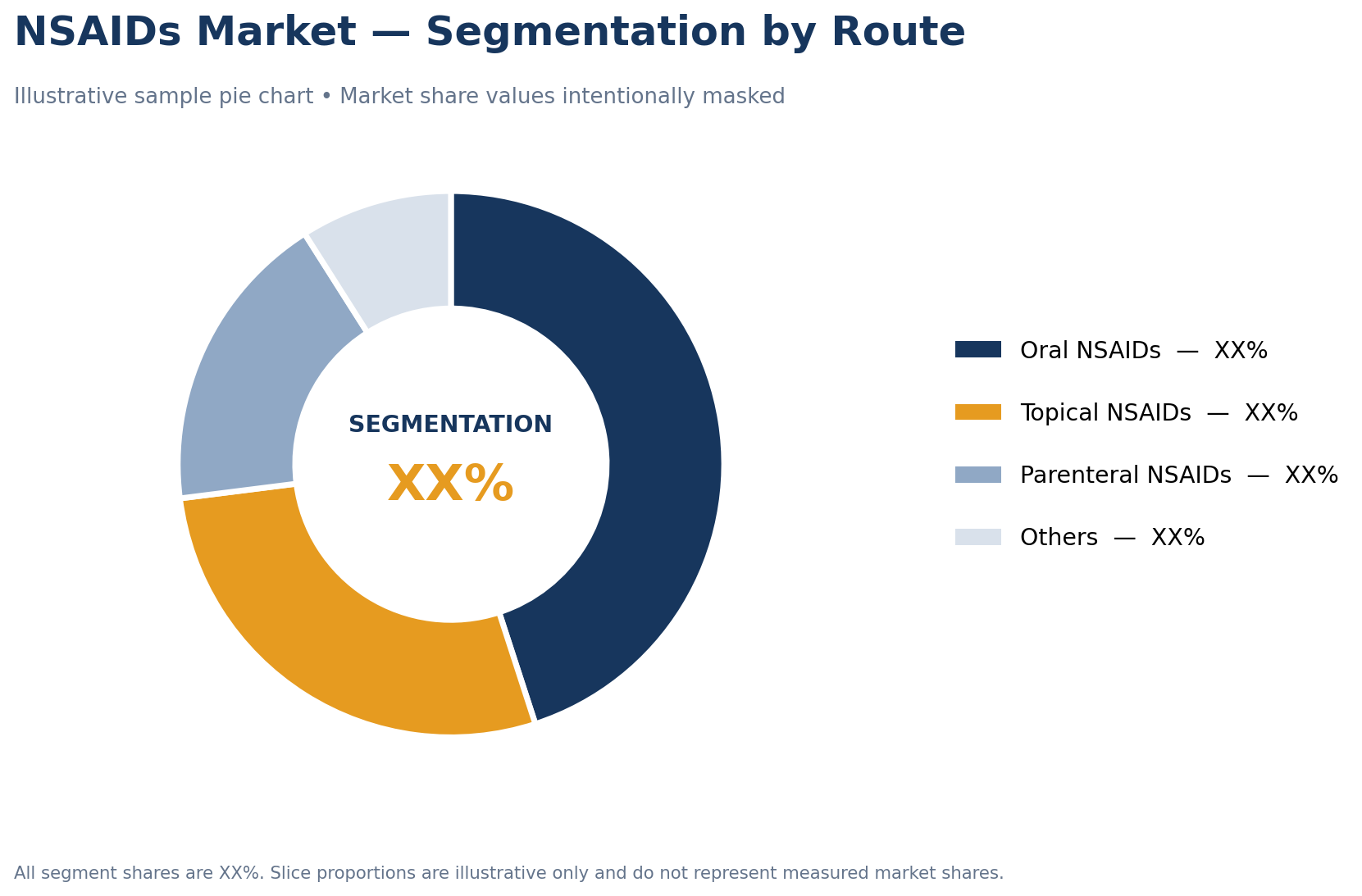
Oral NSAIDs remain the largest segment because tablets and capsules combine familiarity, low unit cost, broad availability and established prescribing patterns across acute and chronic pain. The segment benefits from extensive generic availability and from use in arthritis, musculoskeletal pain, headache and postoperative settings. Its scale is reinforced by retail pharmacy access and the convenience of self-administration. However, the fastest expansion is expected from topical administration, particularly where patients and clinicians seek localized analgesic effects with lower systemic exposure. Topical gels, creams, sprays and patches are increasingly relevant for osteoarthritis and localized musculoskeletal pain. Innovation in penetration enhancers, sustained-release matrices and combination topical products can support premiumization. Parenteral products will remain important in hospital and perioperative settings, but their growth is more closely tied to institutional procedure volumes. The long-term route mix will therefore reflect a balance between the mature, high-volume oral category and incremental adoption of topical and localized products. The market opportunity is increasingly about differentiation around tolerability, convenience and targeted delivery rather than simply increasing conventional oral volumes.
MARKET VISUALS
Market Overview & Sample Analysis
Segmentation Pie Chart - Route of Administration
By Disease Indication
Arthritis represents the largest disease-indication opportunity because osteoarthritis and other inflammatory musculoskeletal disorders are highly prevalent and become more common with population aging. NSAIDs remain widely used for symptomatic pain and inflammation management, supporting recurring demand through primary care, orthopedics and self-medication. Chronic back pain and other musculoskeletal conditions also create a broad addressable population. Migraine is positioned as a faster-growing opportunity within the analyzed indication set because awareness of non-opioid acute treatment and the continued need for accessible, rapidly acting therapies support demand. Product differentiation through rapid onset, combination formulations and patient-friendly dosage forms can increase utilization in this segment. Ophthalmic applications remain more specialized, with demand linked to postoperative inflammation and specific ocular conditions. The indication mix is nevertheless shifting toward products that can demonstrate a favorable benefit-risk profile, particularly among older patients and individuals with cardiovascular, renal or gastrointestinal risk factors. Consequently, future growth will not be driven solely by disease prevalence; it will also depend on safer utilization, physician selection, formulation innovation and patient adherence.
By Distribution Channel
Retail pharmacies represent the largest distribution channel because NSAIDs have a substantial OTC component, broad consumer familiarity and high-frequency use for common pain and inflammatory conditions. Retail distribution also supports rapid product availability and makes branded and generic alternatives easy to compare. Hospital pharmacies remain important for prescription NSAIDs, injectable products and institutional purchasing, particularly in surgical, emergency and inpatient care. Online pharmacies are expected to be the fastest-growing channel as digital purchasing, home delivery and telehealth-supported prescribing become more common. Online channels also provide manufacturers and retailers with opportunities for direct consumer education, subscription-style replenishment and personalized product recommendations within applicable regulatory boundaries. Growth in emerging markets is likely to strengthen all three channels as pharmacy infrastructure expands. However, channel development will remain shaped by national rules governing OTC medicines, e-pharmacy operations and prescription fulfillment. Competitive differentiation is therefore moving beyond product chemistry toward availability, convenience, price transparency and omnichannel engagement. Companies able to combine trusted brands with efficient generic or value offerings and reliable digital distribution can capture incremental demand without relying solely on new molecular innovation.
Region and Country Analysis
MARKET VISUALS
Market Overview & Sample Analysis
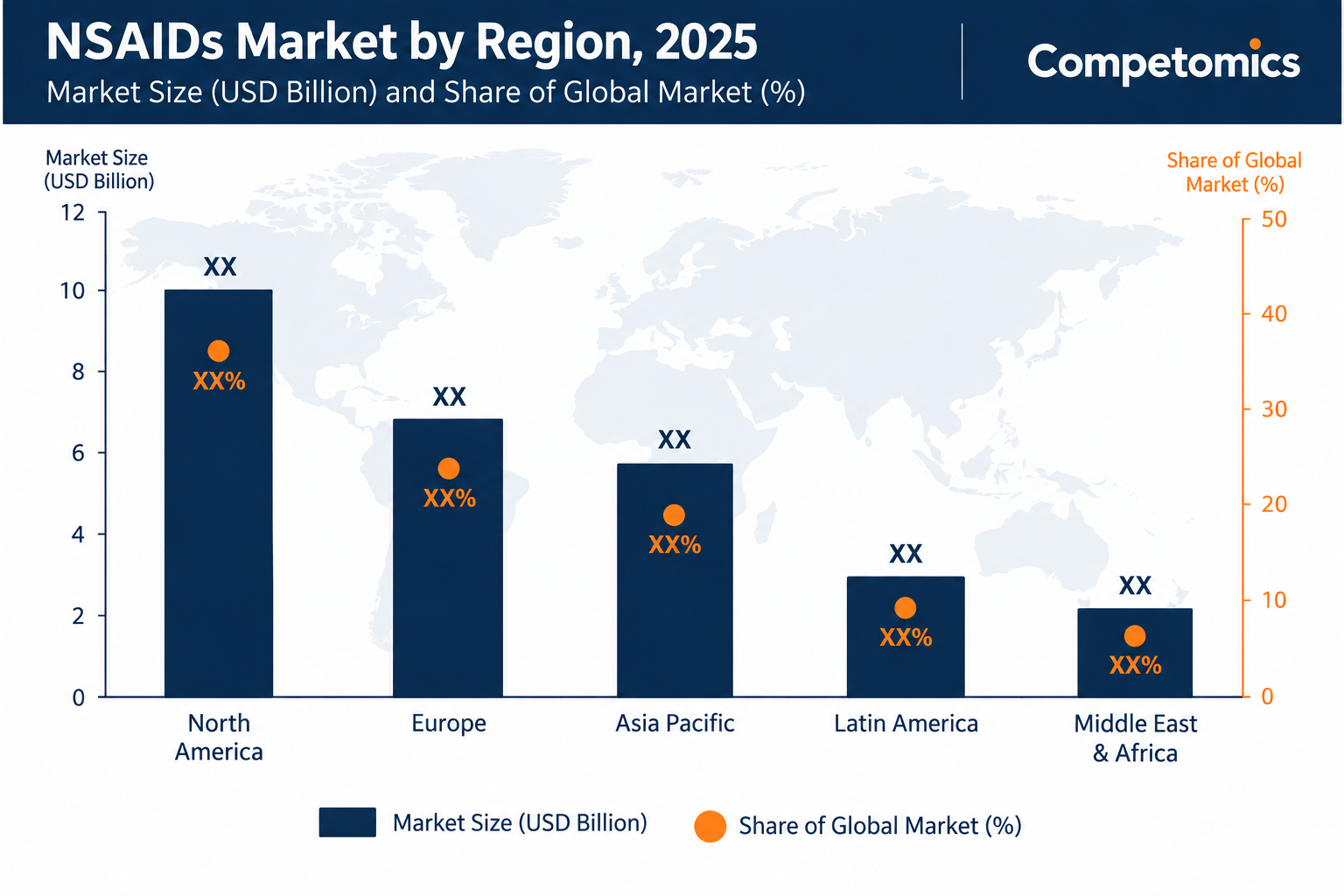
Figure 3: NSAIDs Market Size and Share by Region, 2025 (USD Billion and %) - Illustrative Regional Comparison
North America remains a major revenue center because of high healthcare expenditure, established reimbursement pathways, strong technology adoption and the presence of leading manufacturers. The United States generally drives regional commercialization through early product launches, advanced provider infrastructure and significant private and public healthcare spending. Canada contributes through universal healthcare coverage and technology adoption, although procurement and reimbursement structures differ from the U.S. Europe represents a mature but heterogeneous market. Germany, the United Kingdom, France and Italy combine established healthcare infrastructure with increasing emphasis on cost effectiveness, regulatory compliance and digital health. Market access is influenced by national reimbursement decisions, public procurement and EU-level regulatory requirements. Vendors increasingly compete through lifecycle service, clinical evidence, interoperability and total cost of ownership. Asia Pacific is the key expansion region as healthcare infrastructure improves, chronic disease burden rises, technology awareness increases and manufacturers broaden local distribution. China, Japan, India and South Korea represent important demand centers, but the adoption curve differs substantially by reimbursement, affordability, local manufacturing and clinical practice. Localization, lower-cost product architectures and partnerships with local healthcare providers can therefore create significant opportunities.
Competitive Landscape
The competitive landscape includes multinational manufacturers and specialized technology companies, with Pfizer, Bayer and Johnson & Johnson among the most prominent participants in the analyzed market. Their position reflects combinations of installed product base, geographic reach, portfolio breadth, technology investment, distribution capabilities and ecosystem relationships rather than a single competitive factor. Pfizer benefits from established scale and portfolio depth; Bayer has a strong position in product innovation and market expansion; and Johnson & Johnson adds complementary capabilities in technology, delivery, monitoring or distribution. Competitive intensity is increasingly shifting from individual products to integrated ecosystems, where software, connectivity, recurring consumables, reimbursement access and clinical support influence customer retention. Smaller specialists and emerging manufacturers can compete through focused technologies, lower-cost models or partnerships. Recent strategic activity among leading participants has centered on product launches, technology integration, interoperability, partnerships and geographic expansion. For this report, the competitive-development chapter will track developments involving Pfizer, Bayer and Johnson & Johnson, including qualifying mergers, acquisitions, partnerships, collaborations, product launches, geographic expansions and major product updates. These developments are important because they indicate how leading companies are building ecosystems, extending product lifecycles and entering adjacent segments. Overall, the market is moving toward higher-value, technology-enabled solutions while established products continue to provide a large recurring revenue base. Through 2035, growth is expected to be shaped by affordability, broader access, interoperability, automation and data-driven care. Companies that combine reliable products with digital platforms, evidence generation and efficient distribution will influence the next phase of market development.
REPORT LICENSING
Choose the access level that fits your team
NSAIDs Market was valued at USD 23.16 billion in 2025 and is projected to reach USD 37.73 billion by 2035, expanding at a CAGR of 5.0% during 2026–2035. Market expansion is supported by structural demand, technology adoption, increasing healthcare utilization and the need for more convenient, effective or connected solutions. Key opportunities include topical and localized NSAIDs formulations, safer/selective and gastro-protective formulations, and expansion through online and emerging-market pharmacy channels.
All prices shown in USD
Standard
Individual Access
Access to the complete market research report for one authorized user. Ideal for individual analysts, consultants, and business professionals.