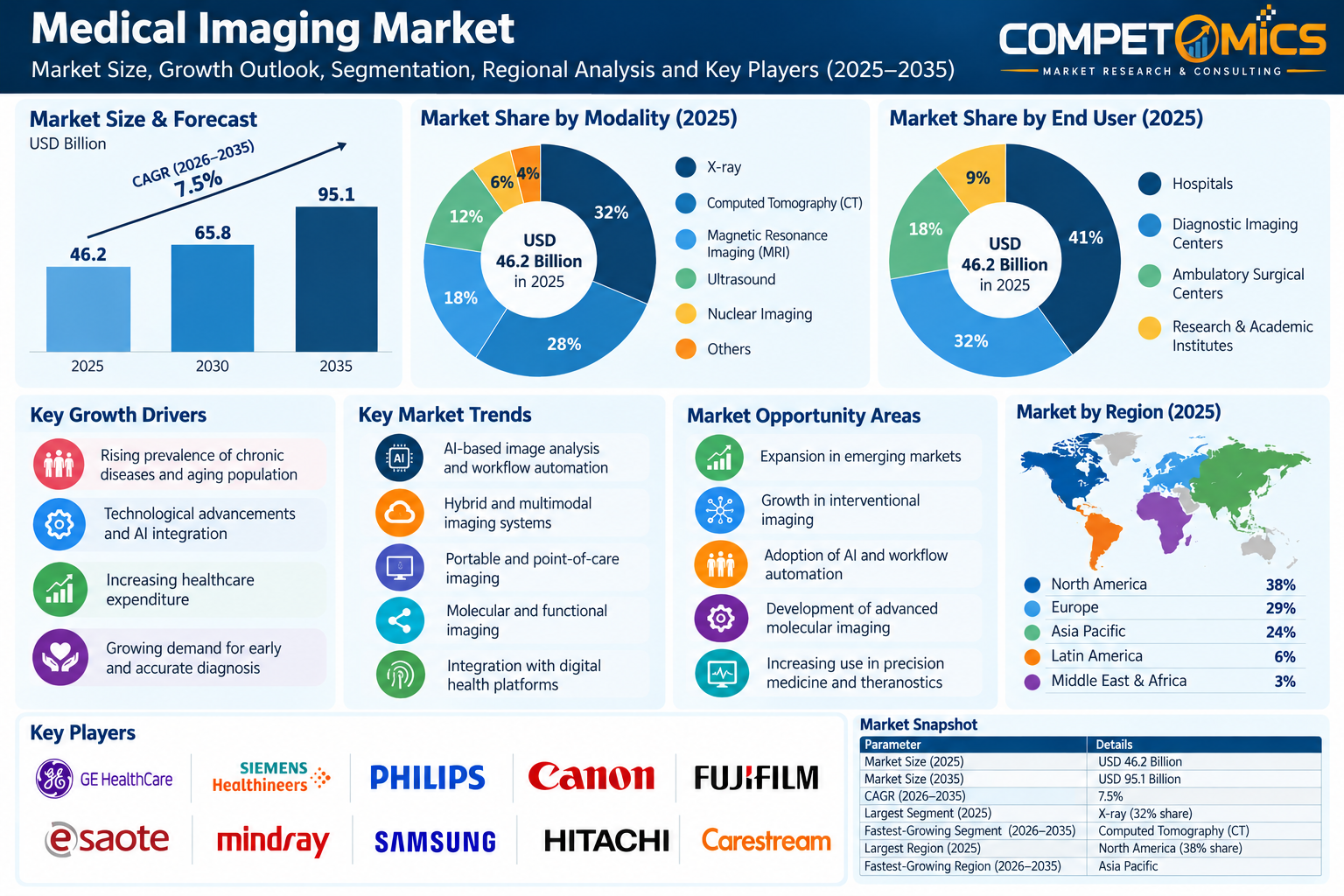
Medical Imaging Market was valued at USD 46.0 billion in 2025 and is projected to reach USD 80.9 billion by 2035, expanding at a CAGR of 5.9% during 2026–2035. Market expansion is supported by structural demand, technology adoption, increasing healthcare utilization and the need for more convenient, effective or connected solutions. Key opportunities include ai-enabled workflow and clinical decision support, replacement and upgrade of aging imaging fleets, and imaging expansion in emerging healthcare systems.
MARKET VISUALS
Market Overview & Sample Analysis
MARKET VISUALS
Market Overview & Sample Analysis
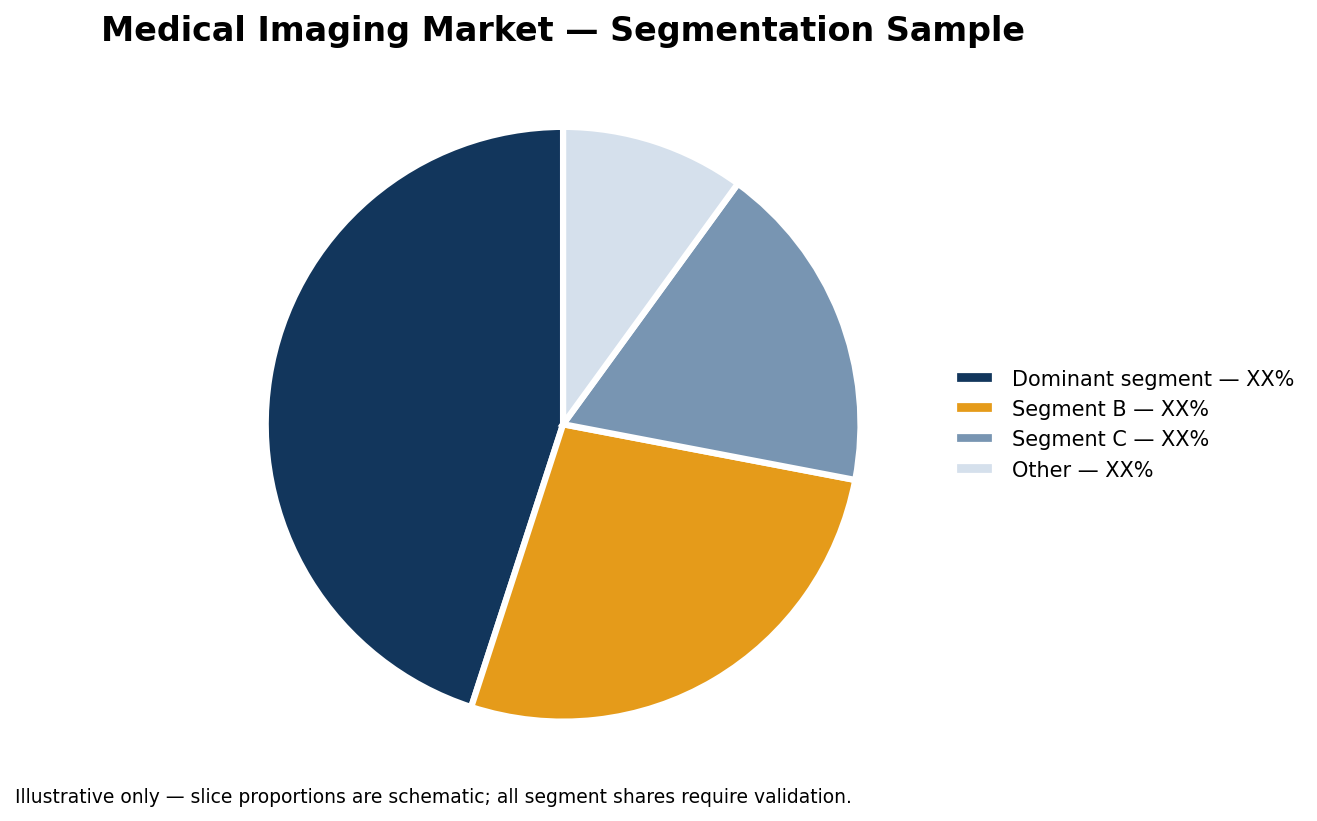
By Modality X-ray remains the largest modality category because of its installed base, comparatively lower capital cost, broad clinical utility and high procedure volumes. Digital radiography continues replacing legacy analog workflows while improving image availability and integration with hospital information systems. MRI is expected to show faster growth as demand rises for high-quality soft-tissue imaging, oncology, neurology and musculoskeletal applications. CT also remains strategically important, with growth supported by cardiovascular imaging, trauma, oncology and screening. Ultrasound benefits from portability, lower capital intensity and expanding point-of-care use, while molecular and nuclear imaging remain specialized but technologically important. Across modalities, replacement cycles are increasingly influenced by workflow automation, energy efficiency, dose reduction, reconstruction software and interoperability rather than hardware specifications alone. The fastest-growing opportunities are therefore concentrated in systems that combine imaging performance with AI-assisted acquisition and interpretation. Providers are also evaluating total cost of ownership, uptime and service models more closely. This favors vendors that can provide integrated hardware, software, service and analytics rather than stand-alone scanners.
By Technology
Digital imaging technologies dominate because healthcare providers are transitioning from film-based or highly manual processes toward electronically captured, processed and shared images. AI-enabled reconstruction, segmentation, triage and workflow orchestration represent the fastest-moving technology layer. These tools can improve throughput, support radiologists in prioritizing studies and reduce repetitive tasks. Cloud connectivity and enterprise imaging platforms are also expanding because health systems increasingly need images and reports accessible across sites. In CT, iterative and deep-learning reconstruction can support lower-dose protocols and improved image quality; in MRI, AI-assisted acquisition and reconstruction can reduce scan time and improve consistency. Ultrasound is incorporating AI guidance and automated measurements. The technology trajectory is therefore moving from device-level digitization to software-defined imaging ecosystems. Cybersecurity, data governance and interoperability are becoming essential commercial requirements as more imaging workflows depend on connected infrastructure. Vendors that can demonstrate workflow impact, integration and lifecycle economics alongside clinical performance are positioned to capture upgrade budgets.
By End User
Hospitals and large integrated health systems remain the largest end-user group because they operate diverse imaging fleets and handle high procedure volumes across emergency, inpatient, outpatient and specialty care. Their purchasing decisions increasingly emphasize enterprise standardization, uptime, service coverage and integration across modalities. Diagnostic imaging centers form an important and growing segment as outpatient care expands and providers seek lower-cost settings for routine imaging. Specialty centers in oncology, cardiology and women's health can support demand for modality-specific systems. Ambulatory and point-of-care environments are also creating opportunities for compact ultrasound, mobile X-ray and other portable technologies. The fastest growth is likely to come from decentralized and outpatient imaging because healthcare systems are seeking capacity outside traditional hospital campuses. Nevertheless, hospital replacement cycles remain critical to market value because high-end CT, MRI, molecular imaging and interventional systems command substantial capital expenditure. Vendors increasingly use managed-service, value-partnership and equipment-as-a-service arrangements to reduce capital barriers. The resulting market structure favors providers capable of supporting both large enterprise installations and distributed care models.
Region and Country Analysis
MARKET VISUALS
Market Overview & Sample Analysis
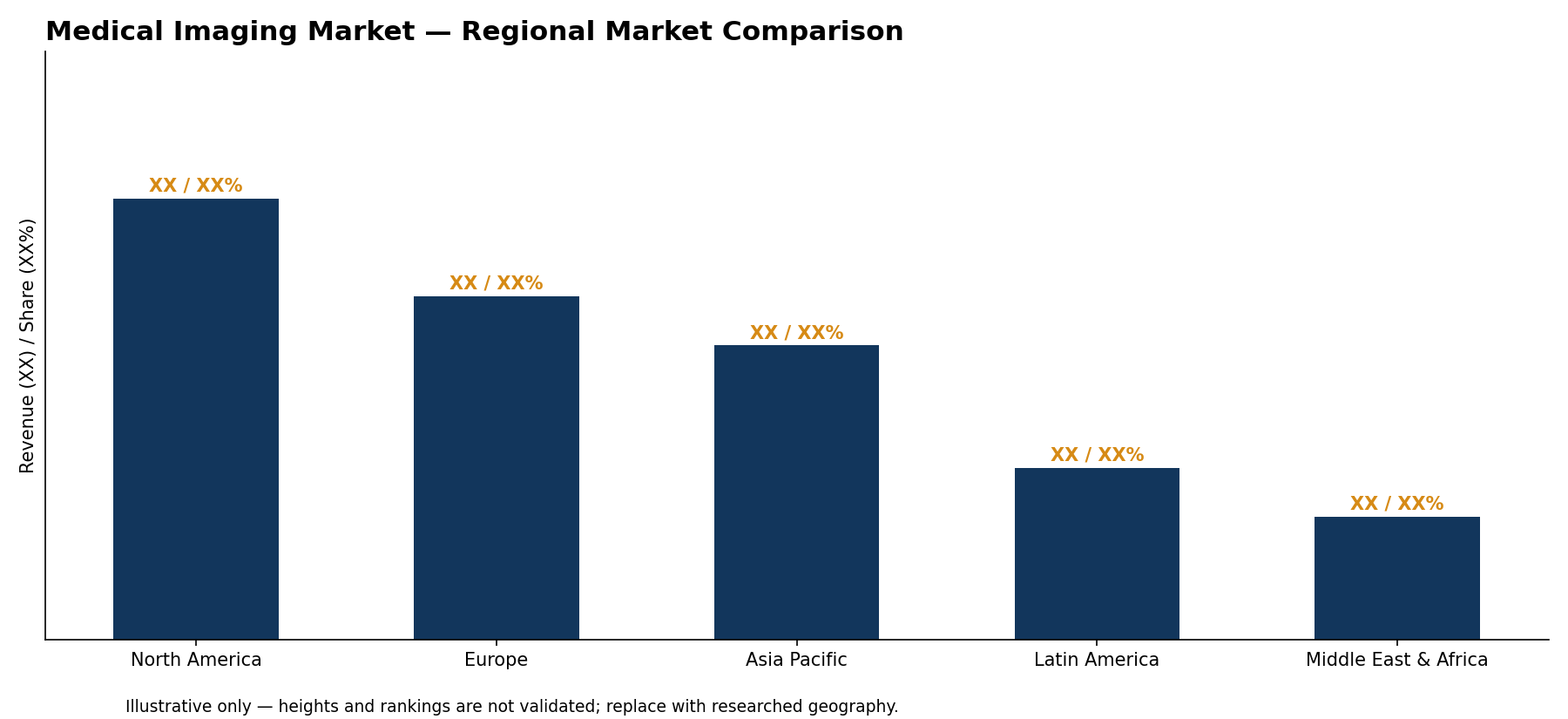
North America remains a major revenue center because of high healthcare expenditure, established reimbursement pathways, strong technology adoption and the presence of leading manufacturers. The United States generally drives regional commercialization through early product launches, advanced provider infrastructure and significant private and public healthcare spending. Canada contributes through universal healthcare coverage and technology adoption, although procurement and reimbursement structures differ from the U.S. Europe represents a mature but heterogeneous market. Germany, the United Kingdom, France and Italy combine established healthcare infrastructure with increasing emphasis on cost effectiveness, regulatory compliance and digital health. Market access is influenced by national reimbursement decisions, public procurement and EU-level regulatory requirements. Vendors increasingly compete through lifecycle service, clinical evidence, interoperability and total cost of ownership. Asia Pacific is the key expansion region as healthcare infrastructure improves, chronic disease burden rises, technology awareness increases and manufacturers broaden local distribution. China, Japan, India and South Korea represent important demand centers, but the adoption curve differs substantially by reimbursement, affordability, local manufacturing and clinical practice. Localization, lower-cost product architectures and partnerships with local healthcare providers can therefore create significant opportunities.
Competitive Landscape
The competitive landscape includes multinational manufacturers and specialized technology companies, with GE HealthCare, Siemens Healthineers and Philips among the most prominent participants in the analyzed market. Their position reflects combinations of installed product base, geographic reach, portfolio breadth, technology investment, distribution capabilities and ecosystem relationships rather than a single competitive factor. GE HealthCare benefits from established scale and portfolio depth; Siemens Healthineers has a strong position in product innovation and market expansion; and Philips adds complementary capabilities in technology, delivery, monitoring or distribution. Competitive intensity is increasingly shifting from individual products to integrated ecosystems, where software, connectivity, recurring consumables, reimbursement access and clinical support influence customer retention. Smaller specialists and emerging manufacturers can compete through focused technologies, lower-cost models or partnerships. Recent strategic activity among leading participants has centered on product launches, technology integration, interoperability, partnerships and geographic expansion. For this report, the competitive-development chapter will track developments involving GE HealthCare, Siemens Healthineers and Philips, including qualifying mergers, acquisitions, partnerships, collaborations, product launches, geographic expansions and major product updates. These developments are important because they indicate how leading companies are building ecosystems, extending product lifecycles and entering adjacent segments. Overall, the market is moving toward higher-value, technology-enabled solutions while established products continue to provide a large recurring revenue base. Through 2035, growth is expected to be shaped by affordability, broader access, interoperability, automation and data-driven care. Companies that combine reliable products with digital platforms, evidence generation and efficient distribution will influence the next phase of market development.