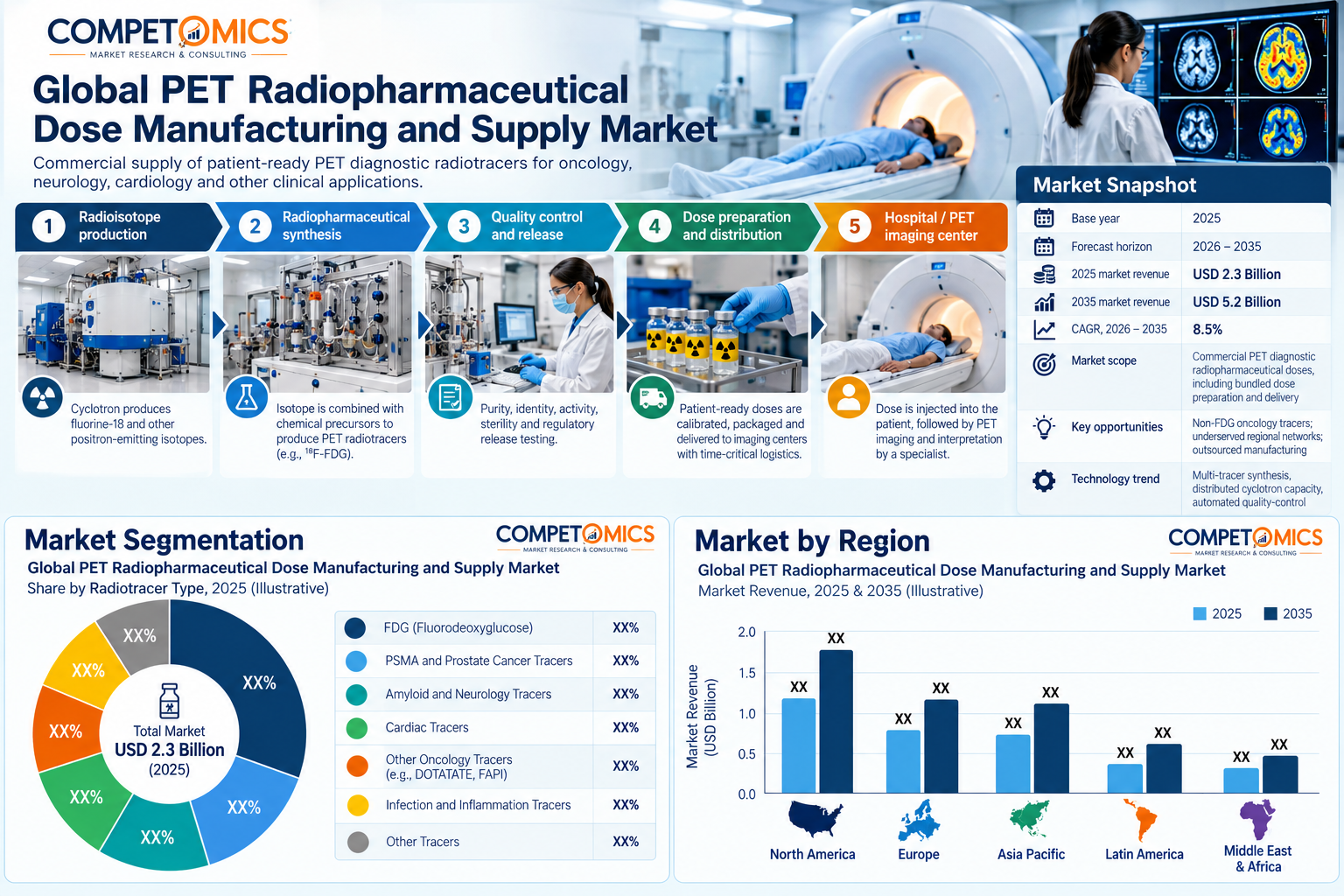
The global PET radiopharmaceutical dose manufacturing and supply market was valued at USD 2.3 Billion in 2025. The market is expected to rise with a CAGR of 8.5% through 2035. The global PET radiopharmaceutical dose manufacturing and supply market comprises of commercially supplied, patient-ready positron emission tomography (PET) diagnostic radiotracers used by hospitals and imaging centers. Demand is supported by oncology staging and treatment assessment, neurological imaging, cardiac imaging and the expansion of targeted molecular diagnostics. Unlike PET scanner sales, this market is driven by recurring radiopharmaceutical dose orders and geographically distributed manufacturing capacity. Short radionuclide half-lives, especially for fluorine-18-based products, make reliable production scheduling, quality release and last-mile delivery essential to supplier competitiveness.
Market Snapshot
MARKET VISUALS
Market Overview & Sample Analysis
Technology trend Multi-tracer synthesis, distributed cyclotron capacity, automated quality-control and dose scheduling PET dose supply economics differ materially from conventional pharmaceuticals. A fluorine-18 tracer must be synthesized, tested, calibrated and delivered within a limited time window. Suppliers therefore compete through production reliability, licensed tracer portfolios, manufacturing-site proximity, radiopharmacy reach and the ability to support scheduled patient procedures. Expansion into PSMA-targeted, amyloid and other specialty PET tracers can increase portfolio complexity and revenue per procedure, but commercialization depends on product approval, reimbursement and manufacturing authorization in each country.
The market includes both vertically integrated radiopharmacy networks and specialist contract manufacturers. It excludes PET/CT scanners, cyclotron and radiochemistry equipment sales, hospital scan charges, and internally manufactured doses not sold to third parties. Separate billing for logistics should be included only when it represents PET-dose-specific supply revenue and is not already captured in dose prices. Segmentation Analysis
By Radiotracer
MARKET VISUALS
Market Overview & Sample Analysis
Coverage: 18F-FDG; 18F-labeled non-FDG tracers; 68Ga-based tracers; other PET tracers
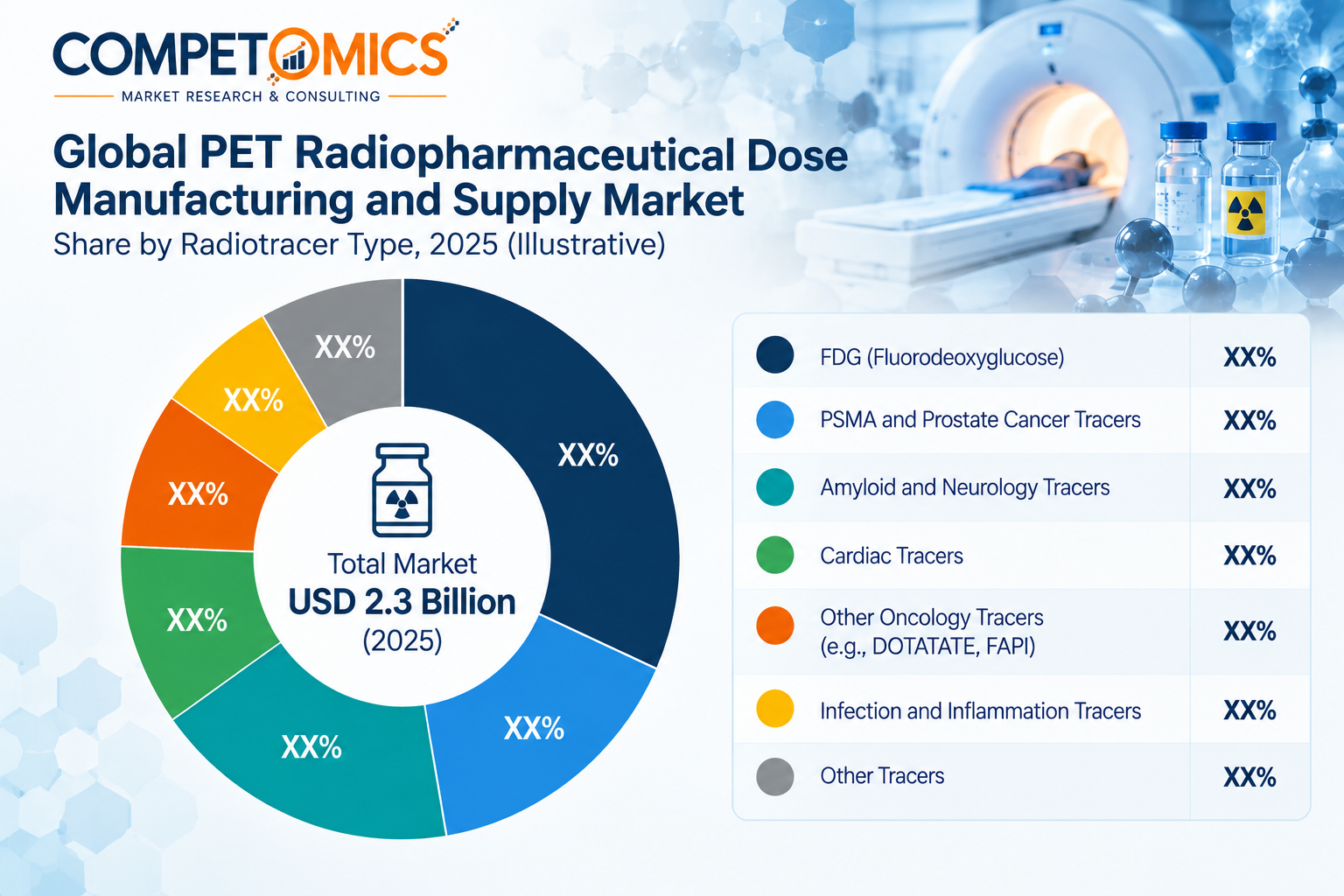
FDG is the established volume backbone of routine PET imaging because of its broad use in oncology and other indications. Its supply model favors regional cyclotron networks capable of predictable, high-throughput production. Non-FDG tracers serve more specialized clinical pathways, including prostate cancer imaging and neurological assessments. Their commercial economics may involve licensing, specialized synthesis and different per-dose prices. Segment leadership and growth rates should be calculated from commercially sold dose volumes and realized revenues rather than inferred from PET procedure counts alone.
By Supply Model
Coverage: Third-party commercial dose supply; contract manufacturing and supply; externally sold doses from hospital-affiliated facilities
Integrated commercial suppliers combine isotope production, synthesis, quality release and logistics. Contract manufacturing models allow tracer developers to commercialize products through established facilities without owning a complete distribution network. Hospital-affiliated cyclotrons may also sell surplus or scheduled production externally. Captive hospital production should be tracked as an adjacent capacity indicator, not counted as third-party market revenue.
By Application
Coverage: Oncology; neurology; cardiology; other diagnostic applications
Oncology generates recurring demand for staging, response assessment and disease characterization, while neurological PET supports applications such as amyloid imaging. Cardiac PET relies on a different mix of tracers and supply arrangements, including products with distinct production and distribution constraints. Revenue allocation should follow the tracer's billed clinical use where feasible and avoid double counting multi-indication products.
By Customer
Coverage: Hospitals; independent diagnostic imaging centers; academic and research institutions
Hospitals and independent PET centers are recurring buyers of patient-ready doses. Academic institutions may operate cyclotrons, purchase specialized tracers or commission investigational production. Purchasing decisions reflect delivery reliability, radiopharmacy coverage, tracer availability, price, quality assurance and reimbursement economics.
Geographic Analysis
MARKET VISUALS
Market Overview & Sample Analysis
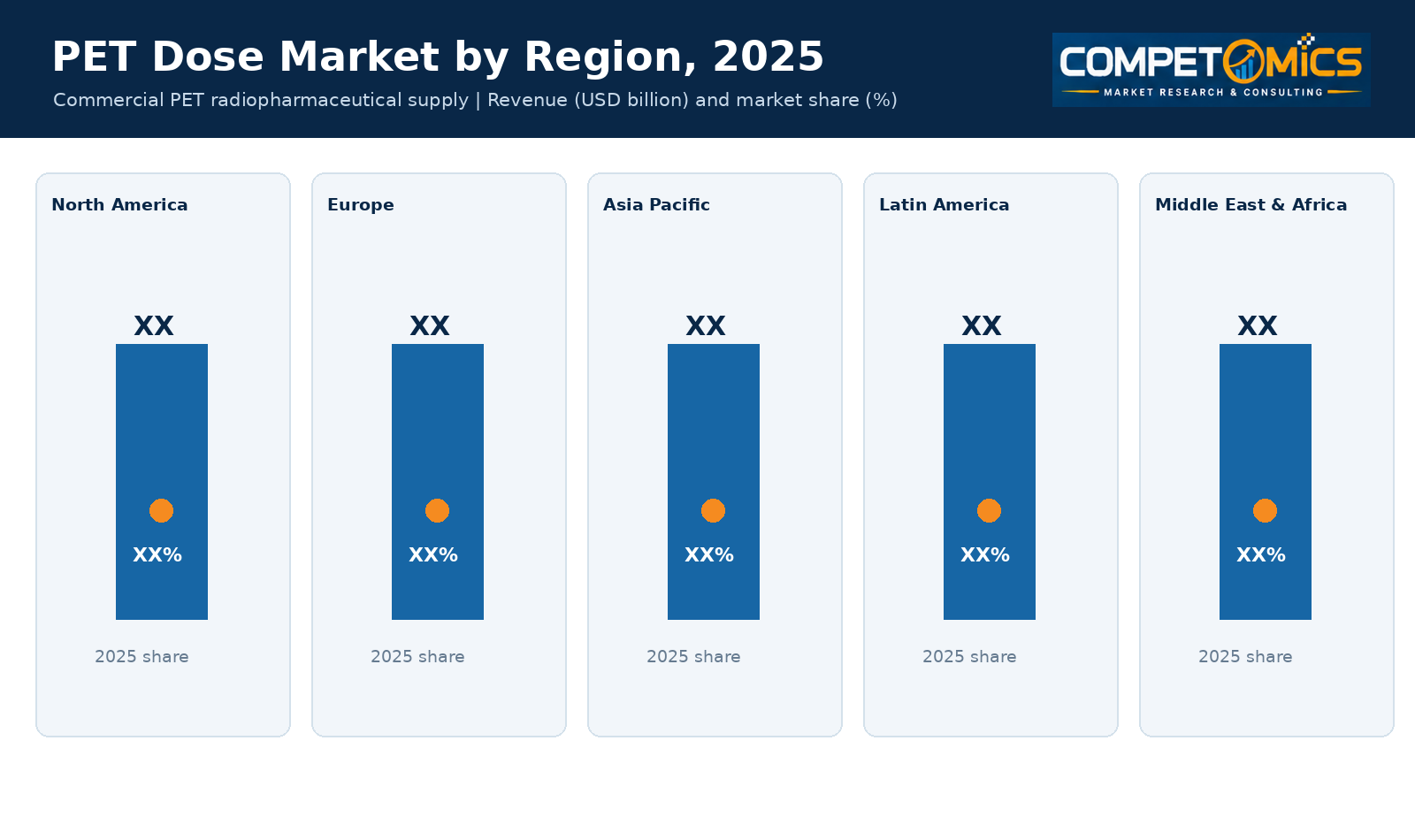
North America The United States has established commercial PET manufacturing and nuclear pharmacy networks, including large multi-site operators. Geographic competition depends on cyclotron proximity, route density, tracer licenses and institutional contracts.
Europe European supply reflects country-specific authorization, reimbursement and radiopharmacy networks. Cross-border transport can be constrained by isotope half-life and national regulatory requirements, supporting local manufacturing and distribution partnerships.
Asia Pacific PET infrastructure expansion, urban imaging demand and localized cyclotron investment create supply opportunities. Country-level analysis is necessary because manufacturing footprints, hospital ownership and access to specialist tracers differ substantially.
Latin America Major metropolitan PET centers and uneven radiopharmaceutical production capacity shape the opportunity for local facilities and partnerships. Commercial feasibility depends on isotope access, licensing and distribution routes.
Middle East & Africa Supply is concentrated around major medical centers and developing nuclear medicine hubs. Locally available cyclotron capacity and specialist logistics are important for expanding access beyond established urban networks.
Competitive Landscape
Siemens Healthineers Radiopharma is a major commercial PET-dose supplier through its manufacturing and delivery network, reporting more than 2.1 million doses supplied annually to over 3,000 imaging centers. Its scale provides a competitive advantage in production redundancy, delivery coverage and multi-site customer service. Cardinal Health is another significant U.S. competitor: its nuclear pharmacy network includes 30 PET cyclotron manufacturing facilities alongside a broader 130-site nuclear pharmacy network, although the latter figure covers nuclear medicine beyond PET. The two networks demonstrate the strategic importance of geographically distributed manufacturing and licensed radiopharmacy infrastructure.
SOFIE Biosciences competes through its PET manufacturing, distribution and contract manufacturing capabilities. In March 2025, SOFIE announced the opening of a PET manufacturing and radiopharmacy facility in Decatur, Illinois, expanding service across Illinois, Missouri and Indiana. This is a concrete example of geographic expansion designed to improve dose availability. GE HealthCare is an important adjacent supplier of cyclotrons, FASTlab synthesis systems and turnkey radiopharmacy equipment, but its equipment revenue should not be counted as commercial PET dose-supply revenue. Competitive market shares cannot be inferred directly from parent-company sales because their disclosed segments encompass different products and services.